Credit applications, new accounts, supplier invoices, expense claims, sick notes, tenant files: whoever handles the file has to decide whether the document can move forward. They also have to write down why, often with the next file already waiting.
Checks every document you receive and tells you whether AI produced or edited it, with the reason written out for the record.
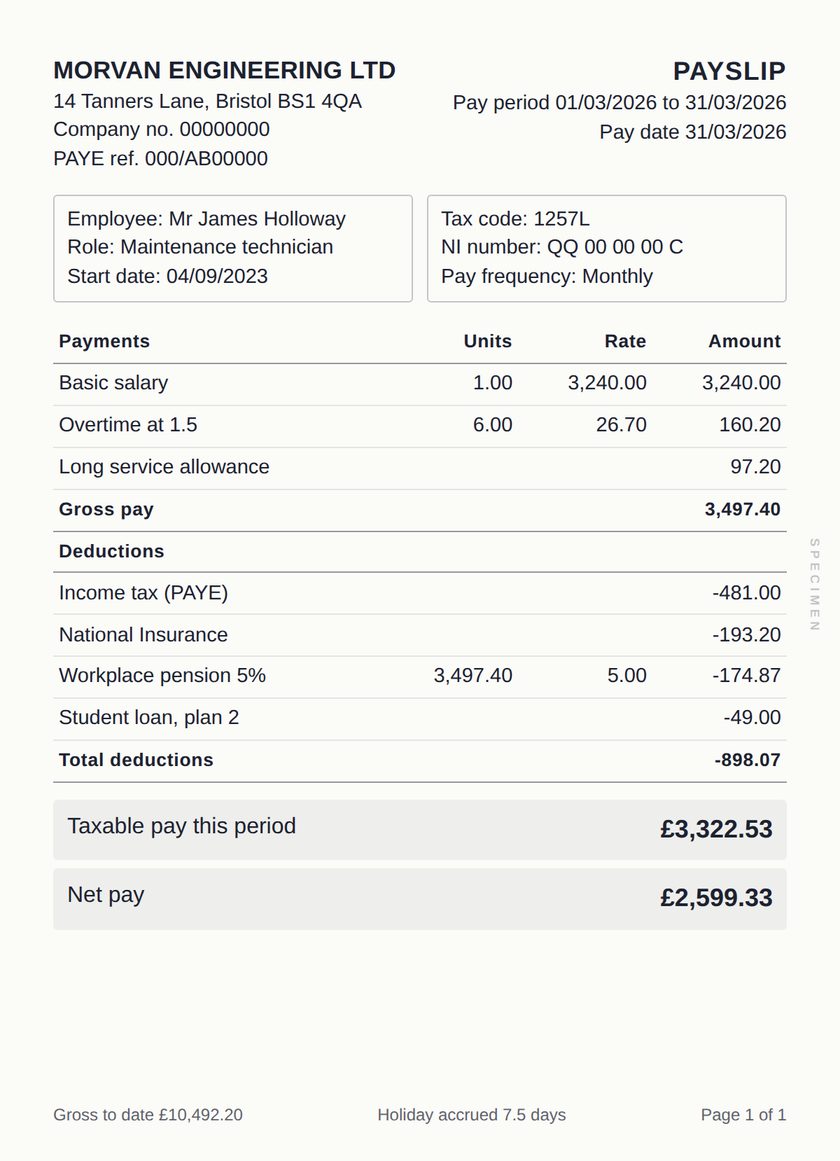
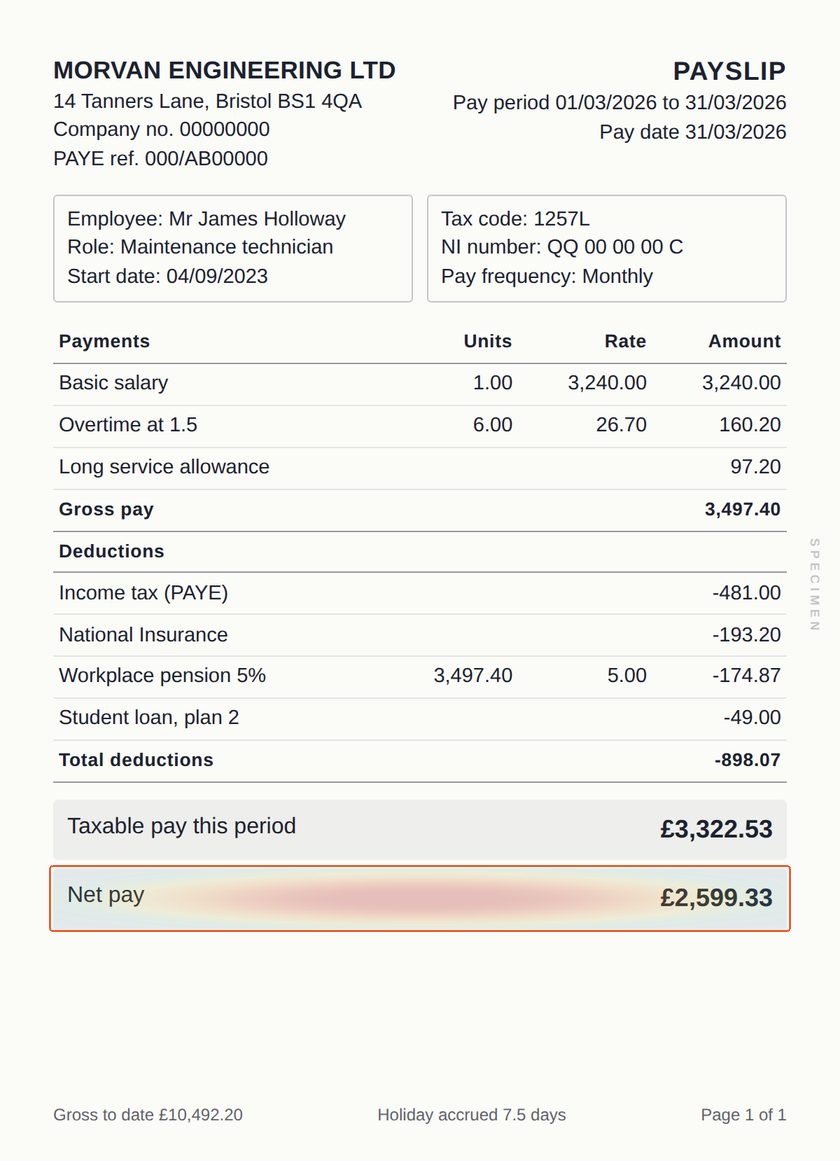
A generated payslip is consistent by design, so the checks built to catch forgeries let it through.
Teams that clear payslips, invoices and statements in credit, insurance and outsourced back offices, and the integrators who serve them.
The problem
Your controls check that a file is consistent, and AI now produces fakes that are perfectly consistent, a payslip produced from scratch or a genuine one with a single line regenerated. Label4.ai looks elsewhere, in the file itself.
A payslip that no payroll system ever produced. Your current controls compare a document with an original, and this one has none to compare it with.
A genuine document where one figure has been regenerated rather than retouched, so everything else holds up, including the parts your rules check.
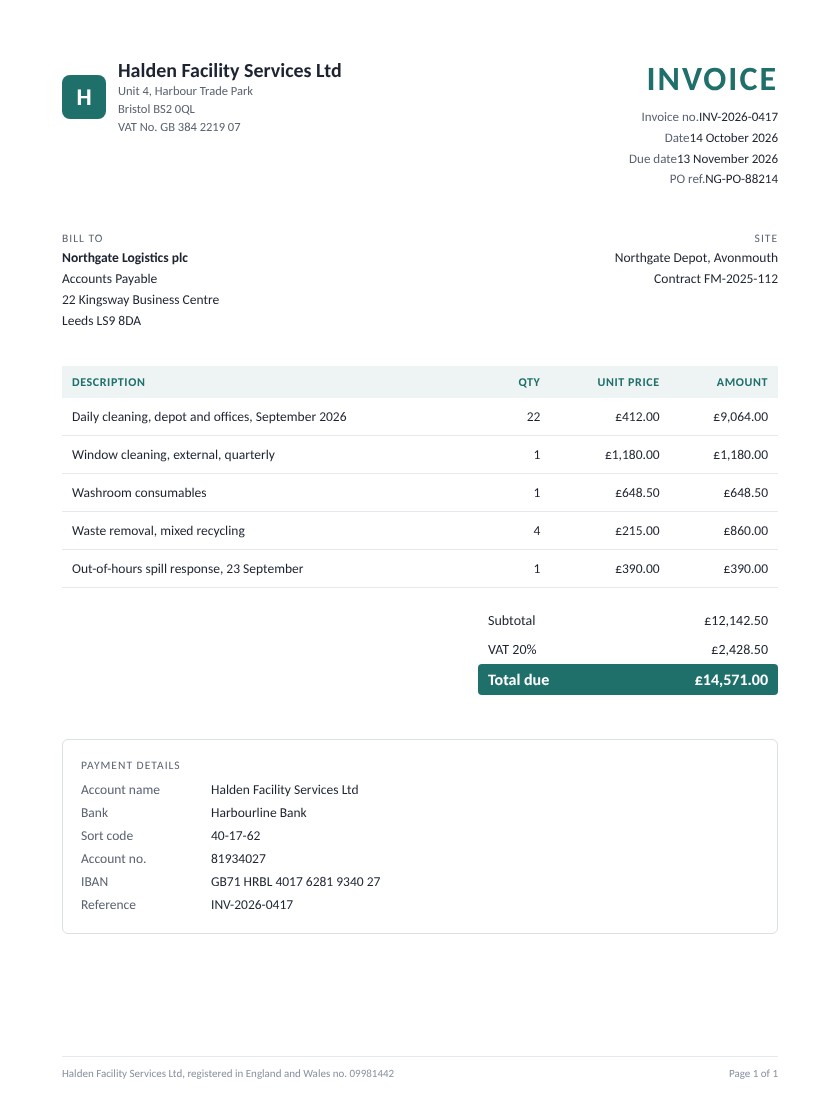 What your eyes see
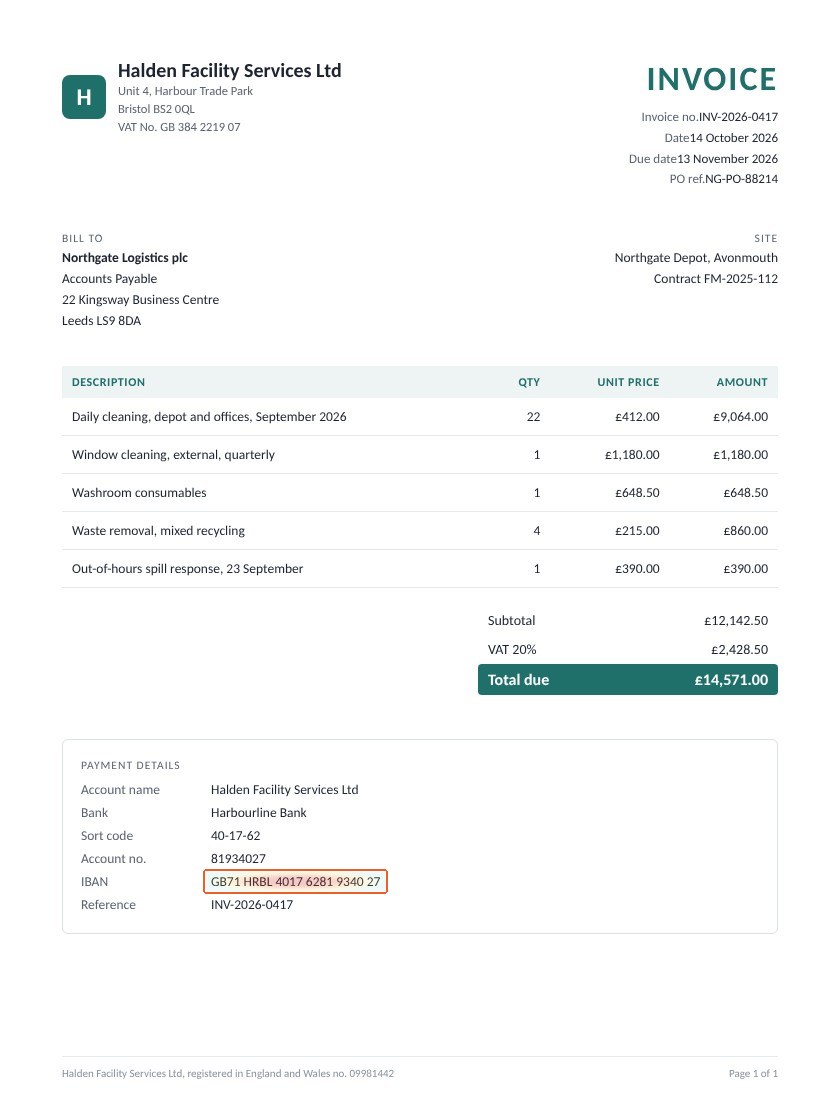 What we see
A genuine supplier invoice in which only the bank details were regenerated.
One actor sends dozens of applications from as many employers, with a single model producing all of them. Each file passes on its own, and the pattern shows once you can read how they were produced.
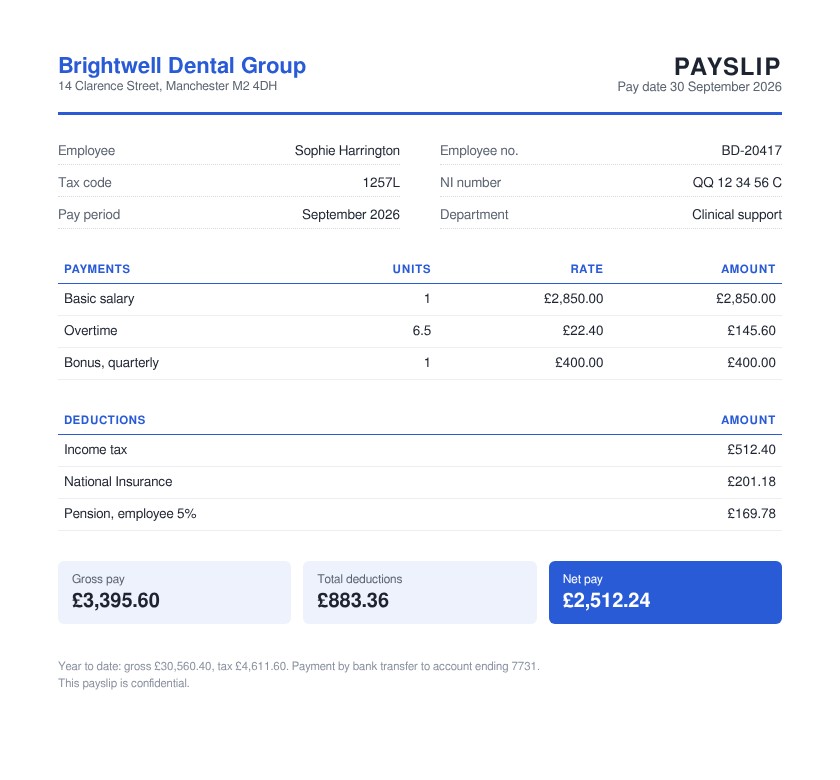
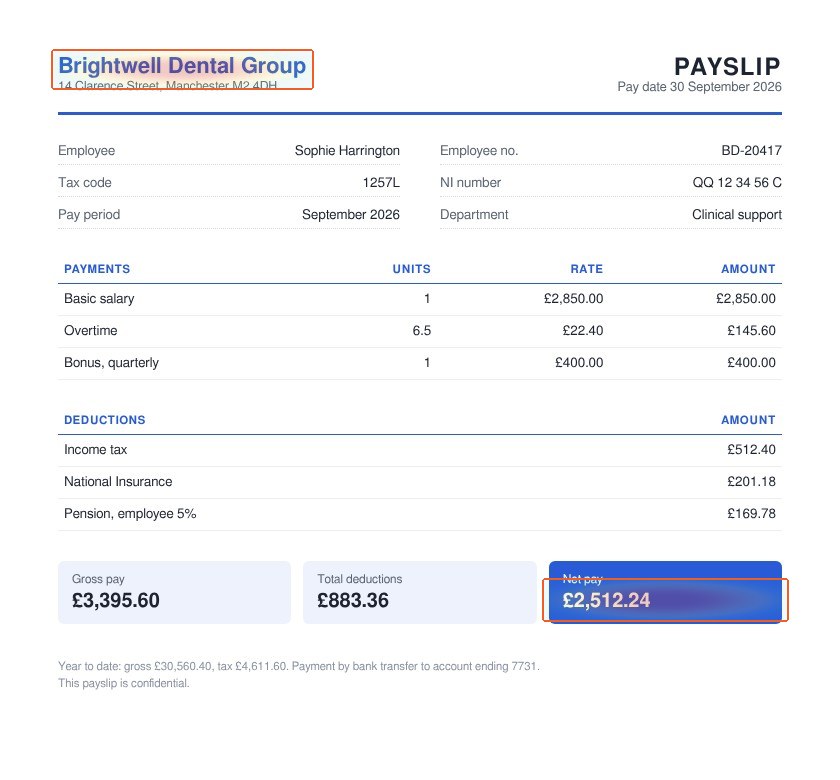 Payslip 1 of 3
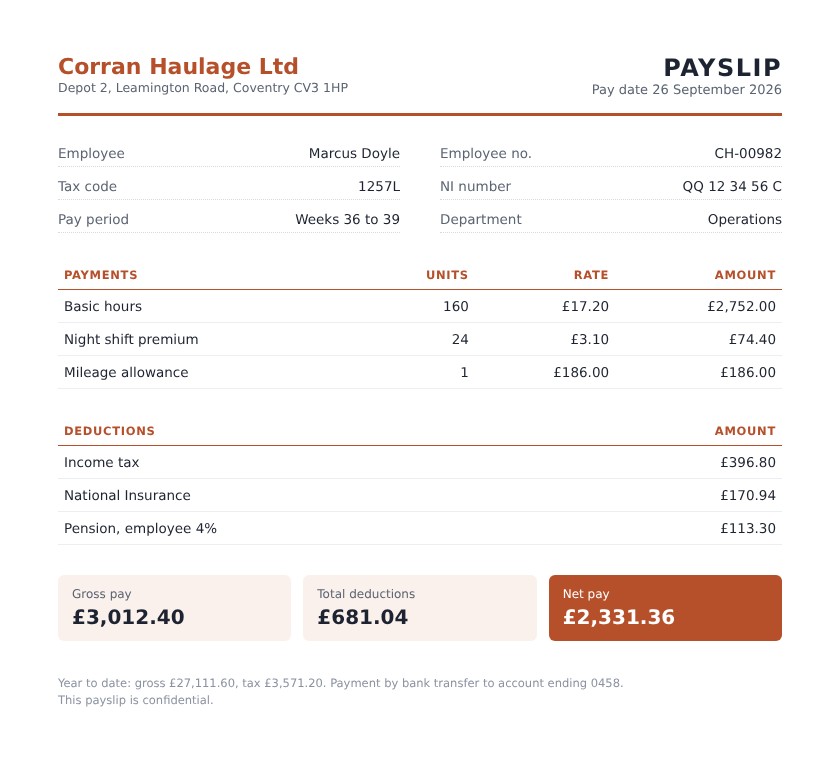
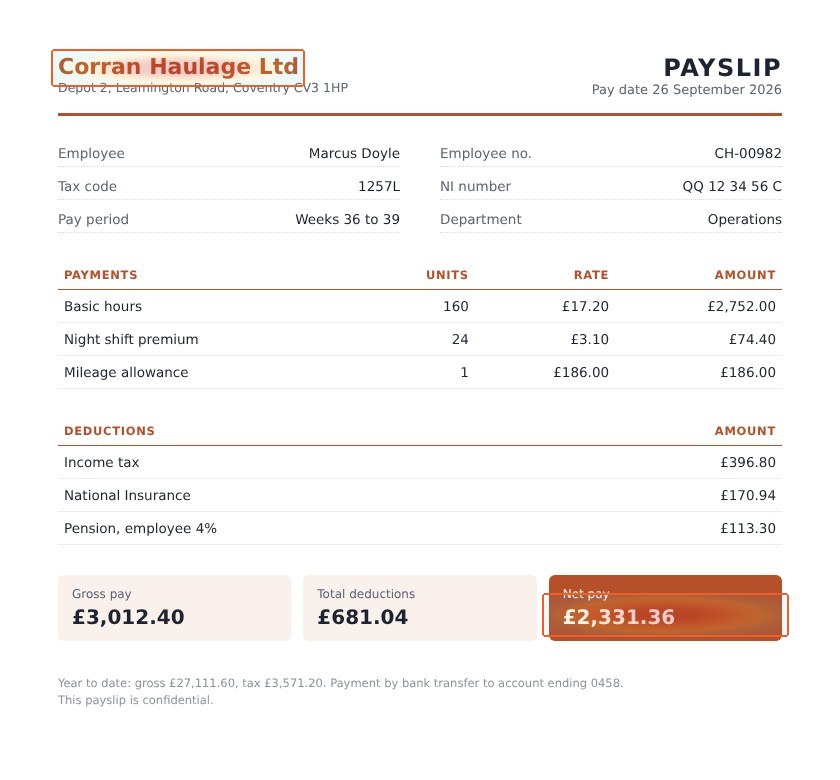 Payslip 2 of 3
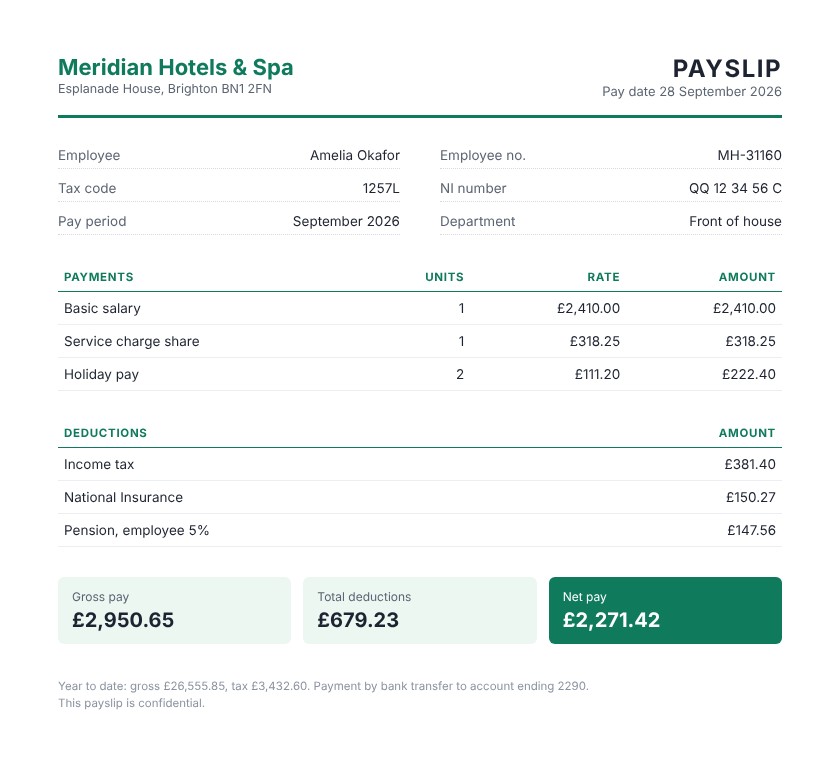
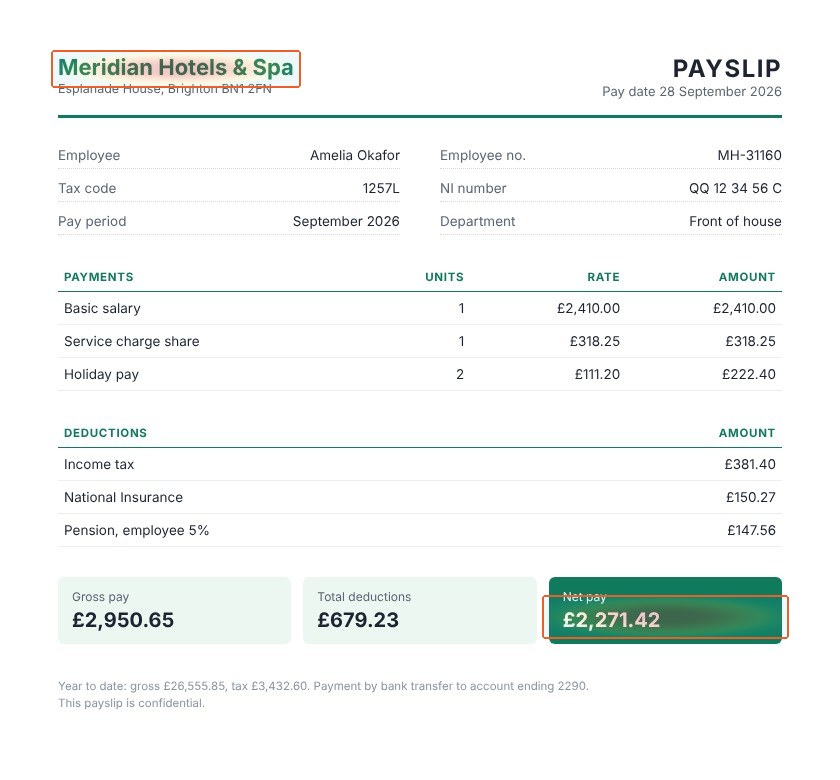 Payslip 3 of 3
In figures
cases were filed to the UK National Fraud Database in 2025, a record and 6% more than the year before.
Source: Cifas, Fraudscape 2026, March 2026of false application filings in 2024 came down to false documentation, the most common reason of all.
Source: Cifas, Fraudscape 2025, April 2025more AI-generated document fraud each month in December 2025 than in May of the same year.
Source: Inscribe, 2026 Document Fraud ReportOur answer
Label4.ai adds one question to the checks you already run, and leaves the rest of your process as it is.
Upload, e-mail, portal or scan, whatever your intake already is.
Template matching, rules, the engine you already licence. Unchanged.
Is this document what it claims to be? Checked automatically as it arrives, in seconds, with its reasons.
Accept, ask for another document, or escalate, with the reason written down.
The operator sees the conclusion first, then three sentences written in the words of the job, like these.
How we do it
It runs in our cloud or on your own servers, through the Anomaly Engine console or the API.
See the technology in detailYour content
You send a batch of documents whose answer you already know, including the frauds you caught and the ones you found out about too late. We come back with a result for each file, your false alarm and missed fraud rates, and a plain statement of what we did not see.
We reply to every request within two working days, under NDA if you prefer.